
New Episode: Majordoma
The Callais episode is up

The latest episode of Divided Argument, Majordoma, is up:
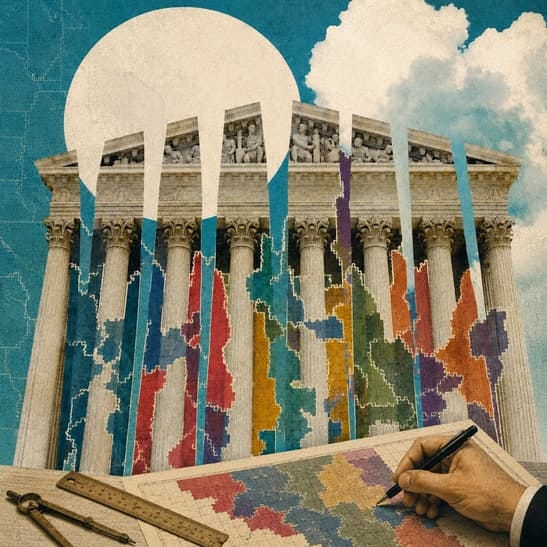
The Court’s latest Voting Rights Act decision, Louisiana v. Callais, narrows Section 2 in a way that could reshape redistricting, weaken majority-minority districts, and intensify the fight over how race and partisanship interact in elections. … We walk through the statutory text, the long-running collision between the Voting Rights Act and the Court’s racial gerrymandering cases, and the practical consequences for future election-law litigation. … The conversation also covers the Court’s emergency procedural move after judgment, Justice Kagan’s forceful dissent, and the broader question of whether the decision is likely to help one party more than the other in the short run.
Comments welcome!
I feel like Dan is usually extremely reserved so hearing him say "odious" a few times stood out to me, but I would have liked to hear more push back.
I was especially unconvinced about Will's defense of partisanship vs race and of whom this will benefit in the long run. Will kept saying that black people have just as much opportunity to elect republicans still, but I don't think that can be true since their compact living districts have been split up! Similarly republicans have had 60+ years to enact policy and convince black people to vote for them and they seemingly haven't been interested (whereas they have made overtures and inroads at times with other minority groups). Combining this decision with Rucho (which I think is the most undemocratic and anti-rule of law decision of my life time) I think just means a clear road map for legal racial gerrymandering. I also think Rucho is doubly bad because since the US supreme court has wiped their hands of partisan gerrymandering it is leaving states like Florida to blatantly ignore their own state constitution to implement republican gerrymanders without any recourse other than an extremely long and difficult process of impeachment and elections.
I've read things like Pildes' take on Callais, but all of that seems like pie-in-the-sky "what ifs". E.g. Pildes' says that this might backfire if dems take control in '28 and pass voting rights legislation. This just skims over the fact that right now that would require dems to win at least 60 seats in the extremely undemocratic senate (most forcasters put this likelihood around 0%). Pildes also mentions democrats could spread black voters out in states they control to counteract southern states changes, but this is exactly the type of voter dilution the voting rights act was supposed to stop!
I was curious to look into judge Easterbrook's proposals, but was rather unsurprised to find that scholars find that such an approach would lead to fewer minority representatives and decidedly have a net republican benefit (e.g. https://yalelawjournal.org/article/the-race-blind-future-of-voting-rights)
Finally I'll say that many of the arguments that "we don't know the long term partisan effect" seem like they would fit just as well defending the seemingly race neutral Jim Crow laws -- poll taxes, literacy tests, residency requirements, grandfather clauses, etc. That sits extremely unease with me. I'm not sure when this episode was recorded, but since the decision came down Louisiana and Tennessee have already rushed to implement new GOP gerrymanders, and GOP appointees on the VA supreme court have struck down the DEM gerrymander there. It seems like there is already plenty of on the ground evidence that this decision is benefiting republicans and just speculation (almost entirely from defenders of Callais) that this could have a different partisan valence in the long run.
I haven't dug into much of the other legal analyses of the Callais decision, but I have been reading about the statistical analyses of partisanship vs race (e.g. https://www.gelliottmorris.com/p/2026-05-08-simple-math-error-scotus-callais-vra) and it's reinforcing my belief that this decision was largely driven by a court that wanted to get rid of section 2 and just found Rucho as a convenient shield to do so.
Would have loved to hear you all talk about justice Roberts long history with the voting rights act and why that might have been part of his calculus not to be the author of this decision (since he is often the author of these big cases).
Is there a petition anywhere to replace Dan with a left-leaning law professor who knows what they are talking about?