
Things to Read This Week (3/16/26)
from YJLH to IU

I am actually spending my time in awe and wonder at one of America’s most beautiful places rather than reading anything, but in case you aren’t so lucky:
The big news is that the Yale Journal of Law and the Humanities symposium on Jonathan Gienapp’s book is finally out. I’ve already posted about my entry with Steve Sachs (“Yes, the Founders Were Originalists”), and I especially liked Kevin Walsh’s In The Beginning There Was Positive Law: Section 25, Calder v. Bull, and Constitutional Continuity. The issue also contains Gienapp’s extensive response, The Constitution and Historical Rupture, about 45% of which is directed at our piece. I’m inclined to think that a further sur-reply isn’t necessary and wouldn’t be productive, but if you read the exchange and disagree please leave a comment!
Against General Law Constitutionalism, by Josh Macey, Ketan Ramakrishnan, and Brian Richardson. Obviously I don’t agree with this one either, but flagging it here, and flattered that so many people feel the need to be against it.
The Structure of a Federal Appeal, by Tyler Lindley, probably the single best up-and-coming federal courts scholar. This is one of those nerdy and tricky papers that federal courts students everywhere will probably appreciate.
Some Musings on the SAVE America Act, a detailed, evenhanded account by Derek Muller.
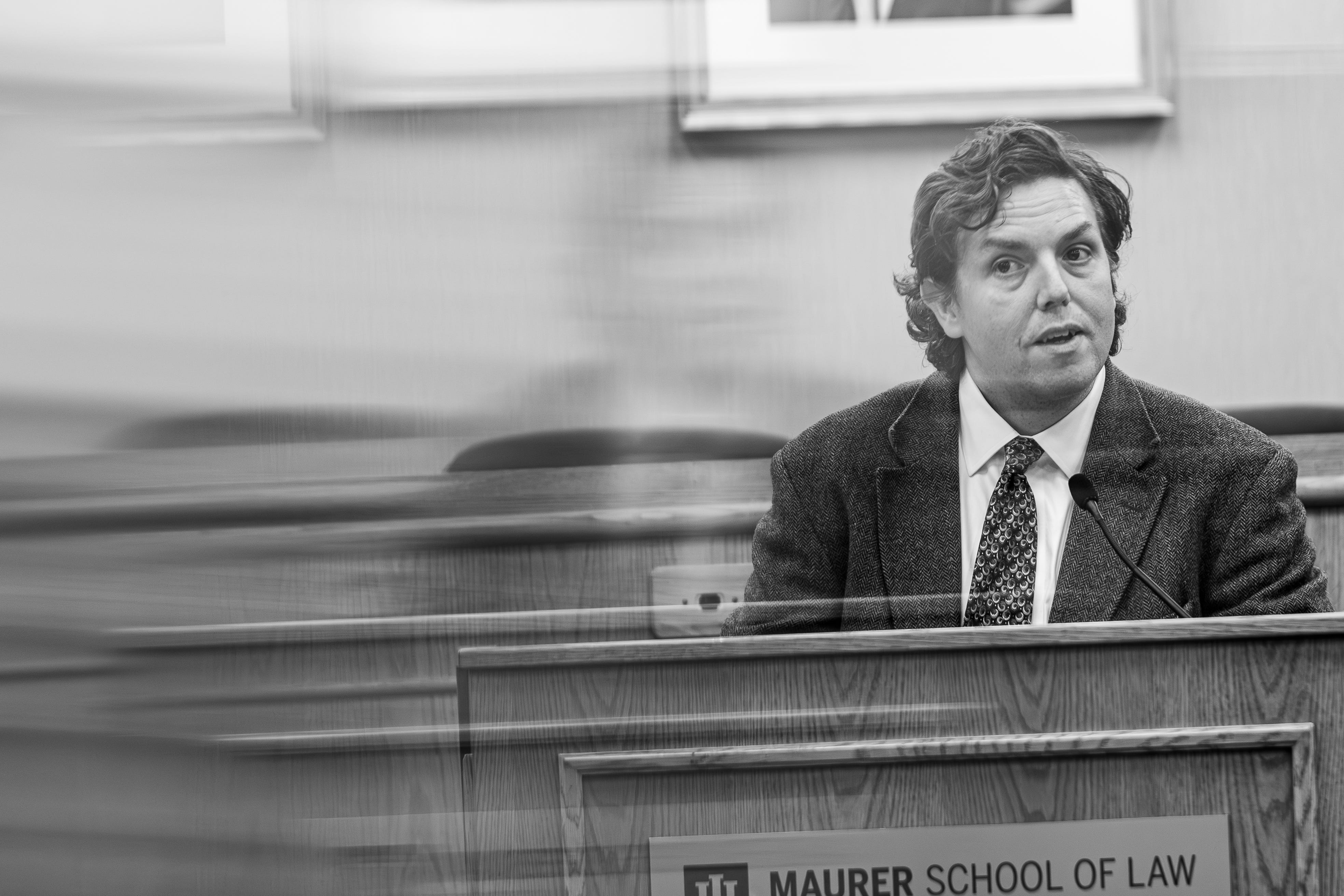
And finally, not yet on SSRN, but last week I returned home to deliver the Jerome Hall Lecture at Indiana University. My title was Beyond Tit-For-Tat, and my topic was the problem of unilateral disarmament in constitutional law. “Why should I follow the rules if you might not? Why should you follow the rules if I might not?” And what can game theory tell us about the prospects of maintaining equilibrium?
I hope to have a write-up soon (speaking of which, does anybody know how to Bluebook a Magic: The Gathering card?) but meanwhile you can watch here:
I enjoyed the piece "Yes, the founders were originalists" but without giving an explicit definition of originalism to be defended I worry that there is a risk of it being more prejudicial that probative. I basically fear that the term originalism has taken on two very different meanings and that the confusion between them makes it very important to be more clear about the sense you mean it.
The term originalism can be applied to a great deal of views and my concern is that absent a particular definition I fear even most scholars will assume, unless they look closely, that the piece is evidence for the idea that the founders sense of the constitution was incompatible with something like living constitutionalism.
Yet when you address the issue of unwritten laws in section 3 you essentially say that is completely compatible with originalism. And I certainly agree that is true in one sense of originalism. However, there is another, arguably more prominent sense of originalism that understands the view in terms of devaluing the role of free floating judicial reasoning by analogy, principle, value etc in favor of hewing to something like the text/opm/etc whose compatibility with the framer's views you don't really address.
And that's a reasonable choice but then it might be preferable to make that fact more apparent in the description.
I'm just here for the "how to bluebook a Magic card" answer... :D